Hardwood Floor Water Damage in Sycamore Park: Save or Replace
Standing in your Sycamore Park kitchen looking at warped, darkening hardwood planks is one of the more gut wrenching moments of homeownership. The floors were not cheap, they probably took weeks to install, and now you are trying to figure out whether a contractor is about to quote you a few thousand dollars in drying or fifteen thousand in full replacement. The honest answer is that it depends on a handful of measurable factors, and the gap between save and replace is narrower than most homeowners think if you act inside the first 24 to 48 hours.
At Sycamore Park Water Restoration, we have walked hundreds of Central Indiana homeowners through this exact decision since 2018. Some floors we saved that looked hopeless. Others we recommended replacing even though the surface looked fine, because the subfloor underneath was already feeding mold. As an IICRC certified, BBB A+ rated team, our job is to give you the truth based on what the moisture meters and the wood itself are telling us. If we cannot help, we will tell you directly. This guide is the same framework our technicians use on every Sycamore Park hardwood job, laid out so you can make an informed call before the first quote ever lands in your inbox.
Quick Answer: Can Your Hardwood Floor Be Saved?
If clean water sat on solid hardwood for less than 24 hours and drying starts immediately, salvage odds are strong. If water sat 48+ hours, came from a sewage source, or your floor is engineered with a thin wear layer, replacement is usually the realistic path. The chart below gives you the snapshot, and the sections after explain why.
Save vs Replace at a Glance
| Condition | Likely Outcome |
|---|---|
| Solid hardwood, clean water, dried within 24 hrs | Save with professional drying |
| Solid hardwood, clean water, 24-72 hrs wet | Save possible, refinish likely |
| Engineered hardwood, any duration over 12 hrs | Usually replace affected planks |
| Category 2 (gray water) saturation | Replace, treat subfloor |
| Category 3 (sewage) contact | Replace, full remediation |
| Visible buckling or crowning | Replace affected sections |
Professional Drying Process for Salvageable Floors
If your floor is a candidate to save, here is what proper drying looks like. Surface fans alone will not get it done.
- Extraction: Standing water removed within hours. See our breakdown on water extraction and standing water removal for the equipment side.
- Specialty mats: Hardwood drying mats create negative pressure that pulls moisture up through the planks.
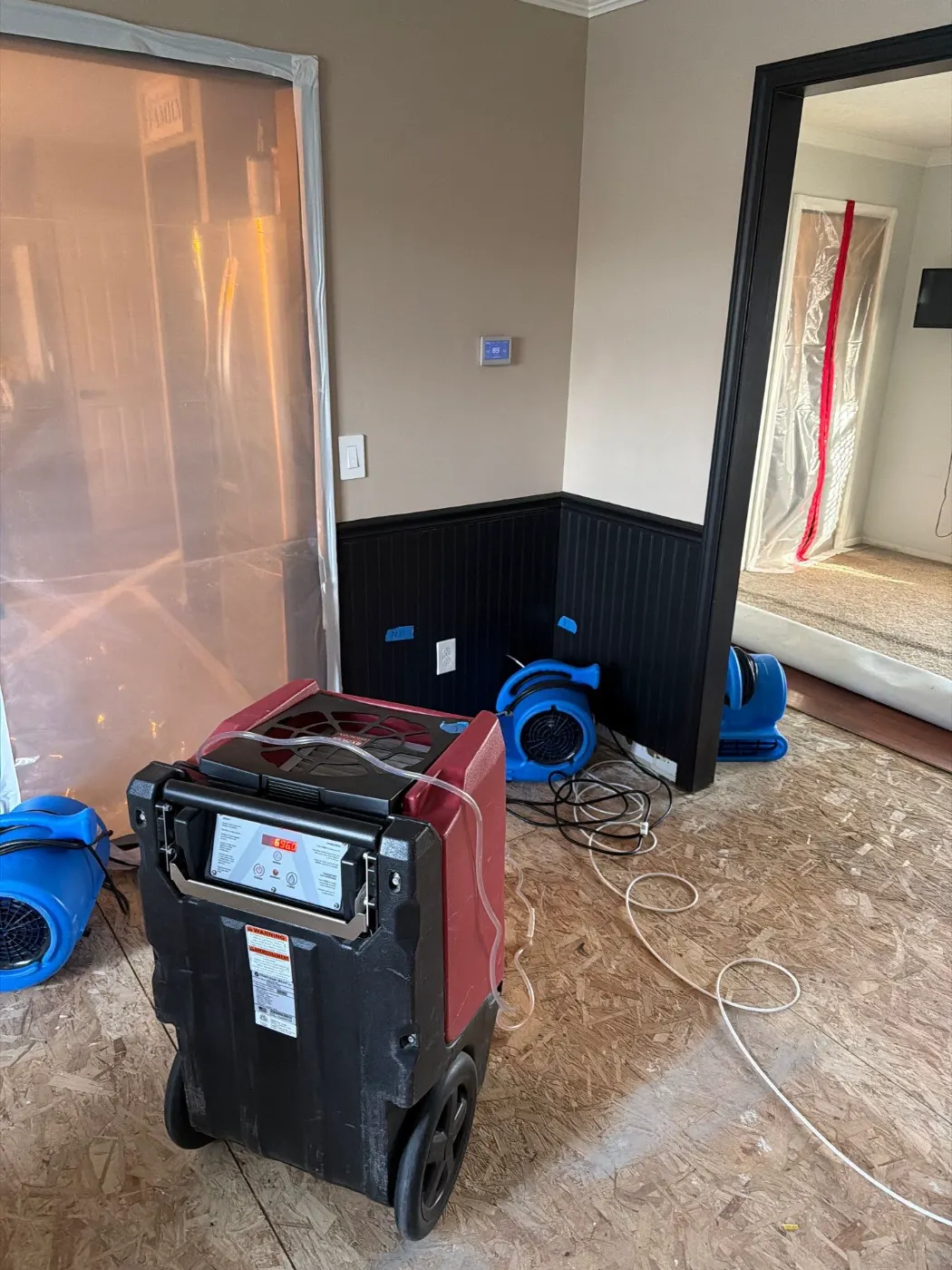
- Dehumidification: Commercial LGR dehumidifiers run continuously, often for 5 to 10 days.
- Monitoring: Daily moisture readings logged for the insurance file.
- Refinishing: Once dry, light sanding and resealing addresses minor cupping.
Expect the drying phase to feel slow. Pulling water out of dense oak or maple at the pace the wood can release it without cracking takes patience. Rushing the process with too much heat causes crowning, which is harder to correct than cupping. Sycamore Park Water Restoration sets target moisture content based on the unaffected areas of the same floor, usually 7 to 10 percent depending on the season in Sycamore Park.
Realistic Costs in Sycamore Park
| Scope | Typical Range |
|---|---|
| Emergency extraction and setup | $800 to $2,500 |
| Specialty hardwood drying (5-10 days) | $2,500 to $6,000 |
| Refinish after successful drying | $3 to $8 per sq ft |
| Full replacement, solid oak | $10 to $18 per sq ft |
| Full replacement, engineered | $8 to $14 per sq ft |
Most Sycamore Park homeowners file under their homeowners policy for sudden and accidental discharge. Gradual leaks are usually excluded. For a deeper look at pricing logic, the complete water damage restoration cost breakdown covers the full range. When weighing save against replace, factor in that a successful dry plus refinish often runs 40 to 60 percent of full replacement cost, and it preserves the original character of older floors that cannot be matched with new stock.
What To Do Right Now
- Shut off the water source if you safely can
- Remove rugs, furniture, and anything porous from the area
- Blot standing water with towels, do not push water into seams
- Turn HVAC to circulate, but do not crank heat (that worsens cupping)
- Photograph everything before cleanup for your claim
- Call a certified pro within the first 24 hours
- Do not sand, refinish, or nail anything down until moisture readings confirm the subfloor is dry
Signs That Point to Save
- Cupping is mild and uniform across the affected area
- Moisture readings drop steadily over the first 72 hours of drying
- No dark staining at plank seams
- Subfloor moisture below 16 percent within a week
- Source was clean (supply line, ice maker, rain)
- Planks remain firmly attached to the subfloor
- No musty odor developing after 48 hours of drying
Signs That Point to Replace
- Buckling or planks lifting off the subfloor
- Black staining that does not lighten with drying
- Soft, spongy feel when you walk across it
- Visible mold growth at edges or under transitions
- Engineered flooring with delaminated wear layer
- Any Category 3 water contact
- Gaps between planks wider than the original installation
Get an Honest Answer on Your Floors Today
Hardwood water damage rewards speed and punishes guessing. The difference between a sand and refinish and a full tear out is often a single decision made in the first 24 hours. Sycamore Park Water Restoration runs 24 7 emergency response across Sycamore Park and Central Indiana, and we will give you a straight read on save versus replace, in writing, before any work begins. Call us, send photos, or book an on site assessment. If your floors can be saved, we will save them. If they cannot, we will tell you that too.
Why Hardwood Reacts So Fast to Water
Wood is hygroscopic. It pulls moisture in and releases it slowly. When a dishwasher line lets go or a supply line bursts overnight, the planks swell from the bottom up. You see three stages:
- Cupping: Edges rise higher than the center. First 12 to 48 hours.
- Crowning: Center bulges above the edges, usually after improper drying.
- Buckling: Planks separate from the subfloor entirely. Replacement territory.
The subfloor matters as much as the surface. Plywood holds moisture longer than the planks above it, which is why surface drying alone fails. Our Sycamore Park Water Restoration crews in Sycamore Park use penetrating moisture meters at multiple depths before declaring anything dry.
Solid vs Engineered: Why It Matters
Solid hardwood is typically 3/4 inch of the same species throughout, which means it can be sanded and refinished multiple times after a water event. Engineered hardwood is a thin veneer (often 1 to 4 millimeters) glued over plywood layers. Once that veneer absorbs water, the adhesive bond weakens and the wear layer delaminates. Even when engineered planks look fine on top, the substrate below is usually compromised. That is why our Sycamore Park technicians almost always recommend plank replacement for engineered floors that sat wet more than half a day.
The IICRC Water Categories That Decide Everything
Before deciding save or replace, you have to know what touched your floor. The IICRC defines three categories, and this drives both the restoration plan and what your insurance adjuster will approve.
- Category 1: Clean water from supply lines, refrigerator lines, or rainwater through a roof. Best salvage odds.
- Category 2: Gray water from dishwashers, washing machines, or aquariums. Contains contaminants. Salvage possible but limited.
- Category 3: Black water from sewage, toilet overflows past the trap, or flood water. Hardwood almost always gets removed.
If your damage came from a toilet overflow or Category 3 source, replacement is the safe call regardless of how good the planks look. Porous wood cannot be reliably sanitized. Keep in mind that a Category 1 event can degrade to Category 2 within 48 hours, and to Category 3 after 72 hours, simply because bacteria multiply in standing water. Time is not just about drying, it is about category.
Frequently Asked Questions
How fast does hardwood need to be dried in Sycamore Park to be saved?
Extraction within 24 hours and active drying within 48 hours gives the highest salvage rate. Sycamore Park Water Restoration dispatches across Sycamore Park 24/7 because every hour past 48 reduces your odds by roughly 10 to 15%.
Will my homeowners insurance cover hardwood floor replacement?
Most policies cover sudden and accidental water events, including supply line breaks and appliance failures. Gradual leaks and flood (groundwater) are typically excluded. Sycamore Park Water Restoration provides the moisture documentation adjusters in Sycamore Park require to approve replacement when drying is not viable.
Can cupped hardwood floors flatten on their own?
Minor cupping under 1/16 inch sometimes self-corrects over 60 to 90 days if the subfloor dries completely. Anything more pronounced needs mat-drying, sanding, or replacement. Readings tell you which.
What is the difference between solid and engineered hardwood after a flood?
Solid hardwood can often be dried, sanded, and refinished multiple times. Engineered hardwood has a thin veneer over plywood core. Once the veneer delaminates or the core swells, replacement is the only option.
How much does professional hardwood drying cost in Sycamore Park?
Typical Sycamore Park projects run $2,000 to $5,500 for extraction plus 5 to 10 days of drying equipment. Mat-drying adds $800 to $2,000. Sycamore Park Water Restoration provides written estimates before equipment placement so there are no surprises.
Have a restoration question?
Our IICRC certified Sycamore Park crew is ready to help. Free assessments, estimate based on what we can sees, no pressure.